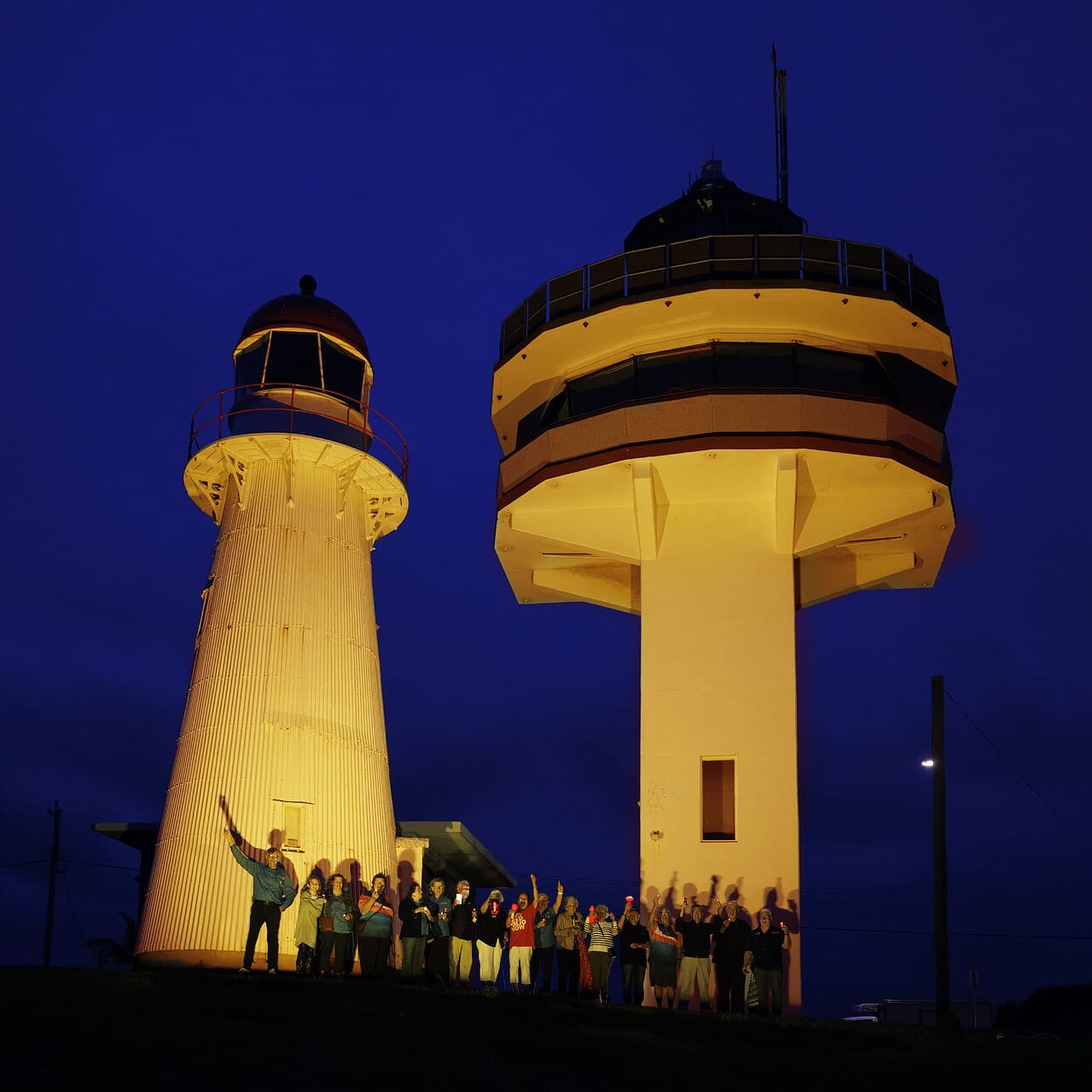
Thanks to Dave for the photo and Discount Lighting & Fans for the spotlights.
We have nearly eliminated the disease through vaccination. But not the virus.
And now in 2024, 20% of children in Queensland are not vaccinated.
The Rotary Club of Caloundra has partnered with Polio Australia and the Friends of the Caloundra Lighthouses to raise awareness around this issue.

Australia Lights Up Orange for Polio Awareness Month
Drawing national attention to Australians affected by polio
As October approaches, Polio Australia once again launches its annual Polio Awareness Month campaign, a crucial
time to shine a light on the tens of thousands of Australians who are living with the late effects of polio. The theme,
"We're Still Here," emphasises the ongoing challenges faced by polio survivors, many of whom continue to deal with
debilitating and new symptoms decades after their initial recovery from the polio virus.
Polio, a disease that once brought fear to communities worldwide, has largely faded from public consciousness thanks
to successful vaccination efforts. However, late effects of polio (LEoP) are an ongoing reality for survivors, manifesting
in symptoms like debilitating fatigue, progressive muscle weakness, chronic pain, and breathing difficulties. Even those
who had mild cases or were unaware they were infected with polio can experience these symptoms decades later.
Polio’s recent global threats and the call for vigilance
Despite major global progress, the recent detection of a polio case in Gaza serves as a stark reminder that the virus
still poses a threat. This case has sparked renewed vaccination efforts in the region, underlining the importance of
ongoing immunisation to prevent future outbreaks. In Australia, while polio has been eradicated for decades, the
global nature of the virus means that it remains only a plane ride away. Vaccination remains our best defence, and
Polio Awareness Month reinforces the critical need to maintain high vaccination rates and ensure that no one relives
the tragedies of the past.
Raising awareness and educating the public
Polio Awareness Month serves as a reminder that while the virus may be almost eradicated globally, the battle is far
from over for those who live with its consequences. This October, Polio Australia again will illuminate multiple
landmarks across Australia orange to bring awareness to all people affected by polio living in Australia. We want
everyone to know that we are still here and we require specific medical care related to LEoP.
Gillian Thomas OAM, Polio Australia’s President and a polio survivor herself, highlights the importance of this
campaign: "Awareness is key. Health professionals need to be informed about the late effects of polio, and polio
survivors must know where to turn for help. Polio Awareness Month is our opportunity to make sure these voices are
heard and that their stories are not forgotten."
Join the campaign
This October, everyone is encouraged to participate in Polio Awareness Month by wearing orange, sharing survivor
stories, attending events, and supporting local initiatives. Together, we can ensure that polio survivors are recognised
and that their unique challenges are acknowledged and addressed.
For more information on Polio Awareness Month events and resources, visit: www.polioaustralia.org.au/polio-
awareness-month-2024/.
Media Contact:
Polio Australia - Devalina Bhattacharjee
Community Development Worker
Ph: 0466 718 222 / Email: devalina@polioaustralia.org.au
About Polio Australia:
Polio Australia is a not-for-profit organisation committed to ensuring that all polio survivors in Australia have access to
appropriate healthcare and support to maintain their independence and quality of life.
Polio Awareness Month began in 2010 in Australia, to align with existing international campaigns including World Polio
Day on the 24th of the month. World Polio Day is focused on eradication of the virus, which remains endemic only in Pakistan and Afghanistan.
Day on the 24th of the month. World Polio Day is focused on eradication of the virus, which remains endemic only in Pakistan and Afghanistan.